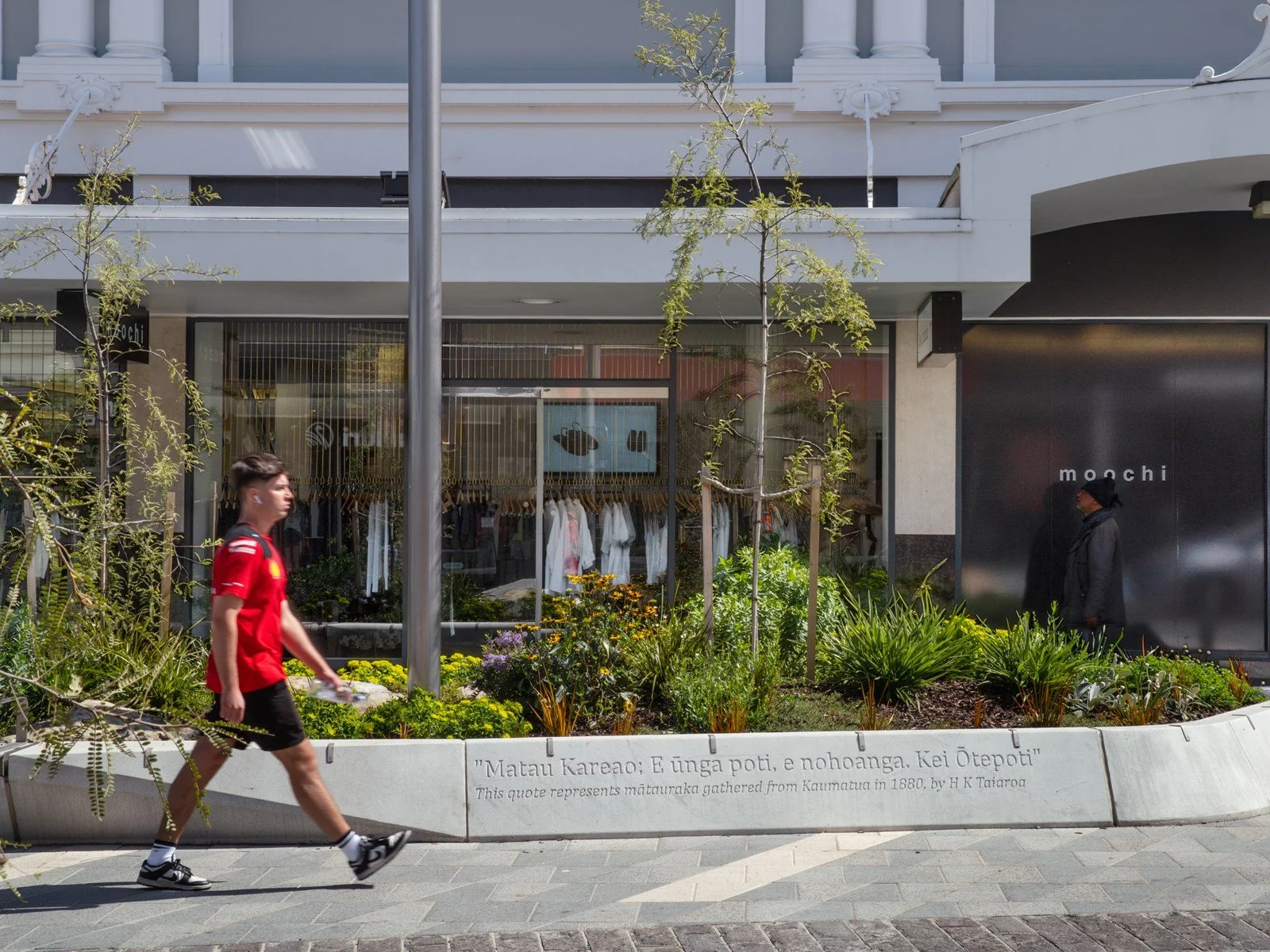
Revitalising George Street, Ōtepoti, Dunedin
Parking dominated the debate. Evidence changed the conversation.
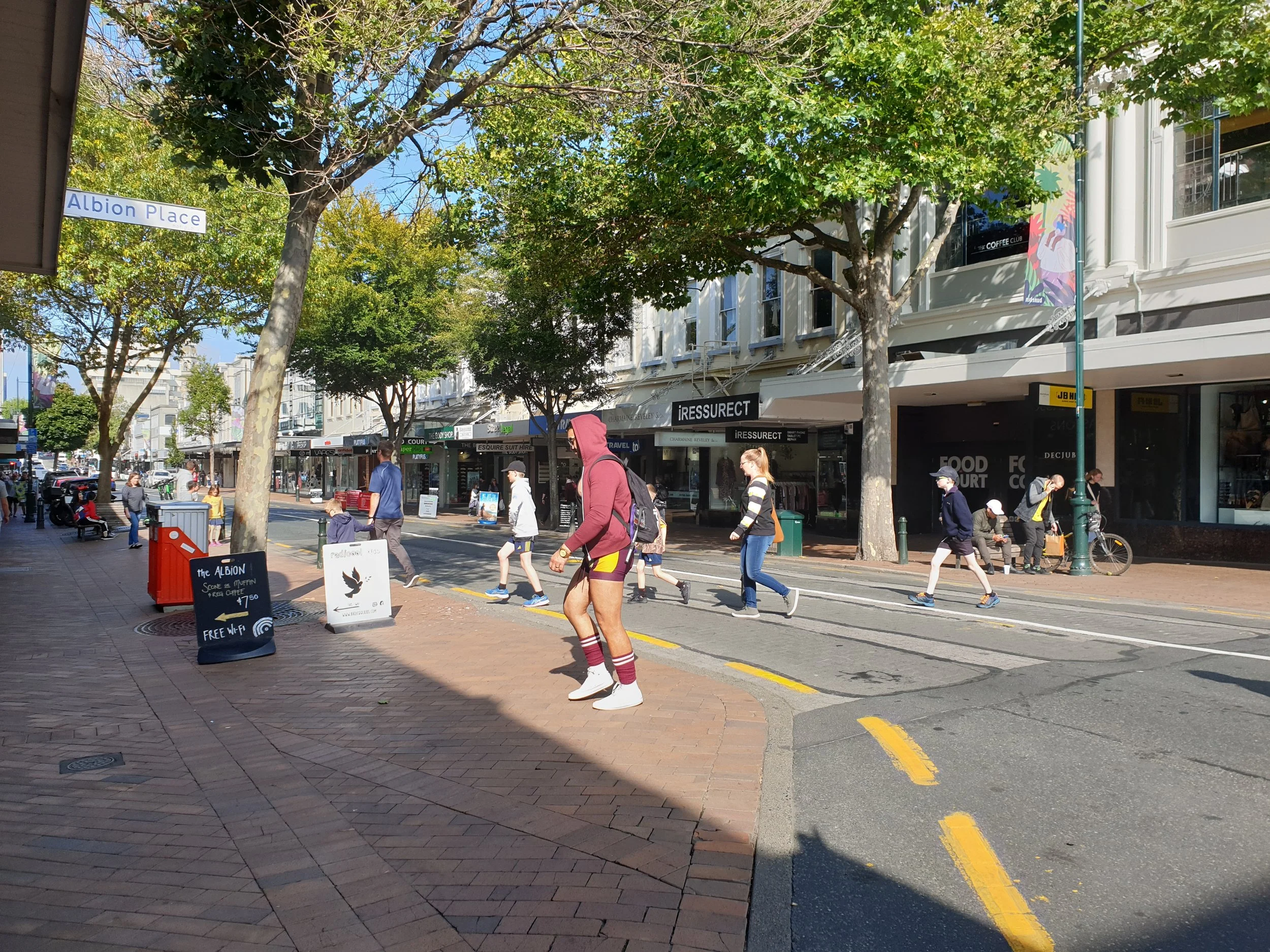
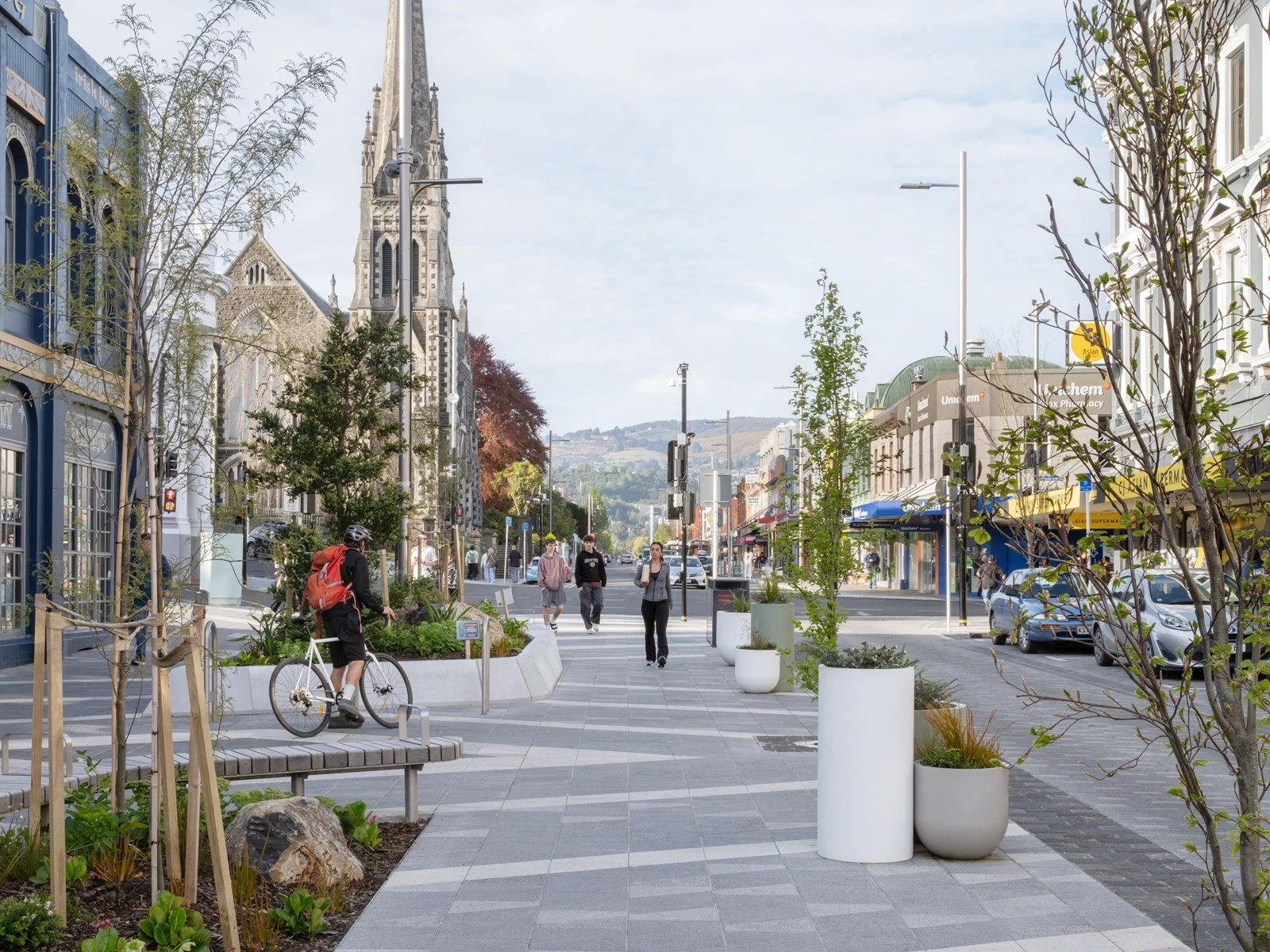
Ahead of the major revitalisation of Dunedin’s George Street — delivered by Jasmax & Aecom — a detailed public life and user perception study was commissioned to test long-held assumptions about how the street worked — and what needed to change.
The goal was not simply to measure activity, but to understand behaviour, access, and the factors shaping confidence in the future of the street.
What we measured.
A structured street-level data programme capturing both behaviour and perception.
Captured:
Pedestrian volumes · Bicycle activity · Staying behaviour ·Age and gender diversity · Public space comfort ·Retail and seating interface · Intercept survey insights
An intercept survey added an important qualitative layer, capturing user motivations, travel choices and perceptions of the street — particularly around access and parking.
This established a measurable baseline and ensured that future change could be assessed against real-world outcomes.
What the data revealed.
Strong pedestrian demand already existed
George Street functioned as a primary walking destination, with consistent foot traffic throughout the day.
Movement dominated, but staying was limited
People passed through more than they lingered, highlighting the opportunity to increase dwell time and economic value.
Comfort and seating were key constraints
Low levels of sitting and family presence suggested the street was not yet designed for longer visits.
The street’s heritage character was a competitive advantage
Fine-grain retail, human scale and visual interest supported walkability and identity.
Parking was the loudest issue — but not the dominant behaviour
Intercept surveys revealed a strong perception that parking was critical, yet a large share of visitors arrived on foot.
Convenience mattered more than supply
Proximity, clarity and ease of access shaped behaviour more than the absolute number of parking spaces.
The real risk was perception, not performance
Concerns about access and change had the potential to slow revitalisation, despite evidence of strong underlying demand.
Why it mattered.
The findings reframed the conversation.
Granular, behaviour-led data showed that revitalisation could strengthen — not weaken — George Street’s role by:
• Increasing dwell time through seating, comfort and activation
• Supporting diverse users, including families and evening visitors
• Improving cycling and walking access
• Addressing perception and communication alongside physical change
• Balancing convenience with long-term vibrancy
Most importantly, the study reduced uncertainty.
By grounding the project in observable behaviour and real user insight, stakeholders were able to move beyond debate and focus on creating a more resilient, people-focused main street.