BETTER URBAN CENTRES WITH DATA.
From active mobility to street life & human behaviour, we turn real-world activity into actionable data.
We call it Urban Metrics.
Our approach.
Evidence, not assumption.
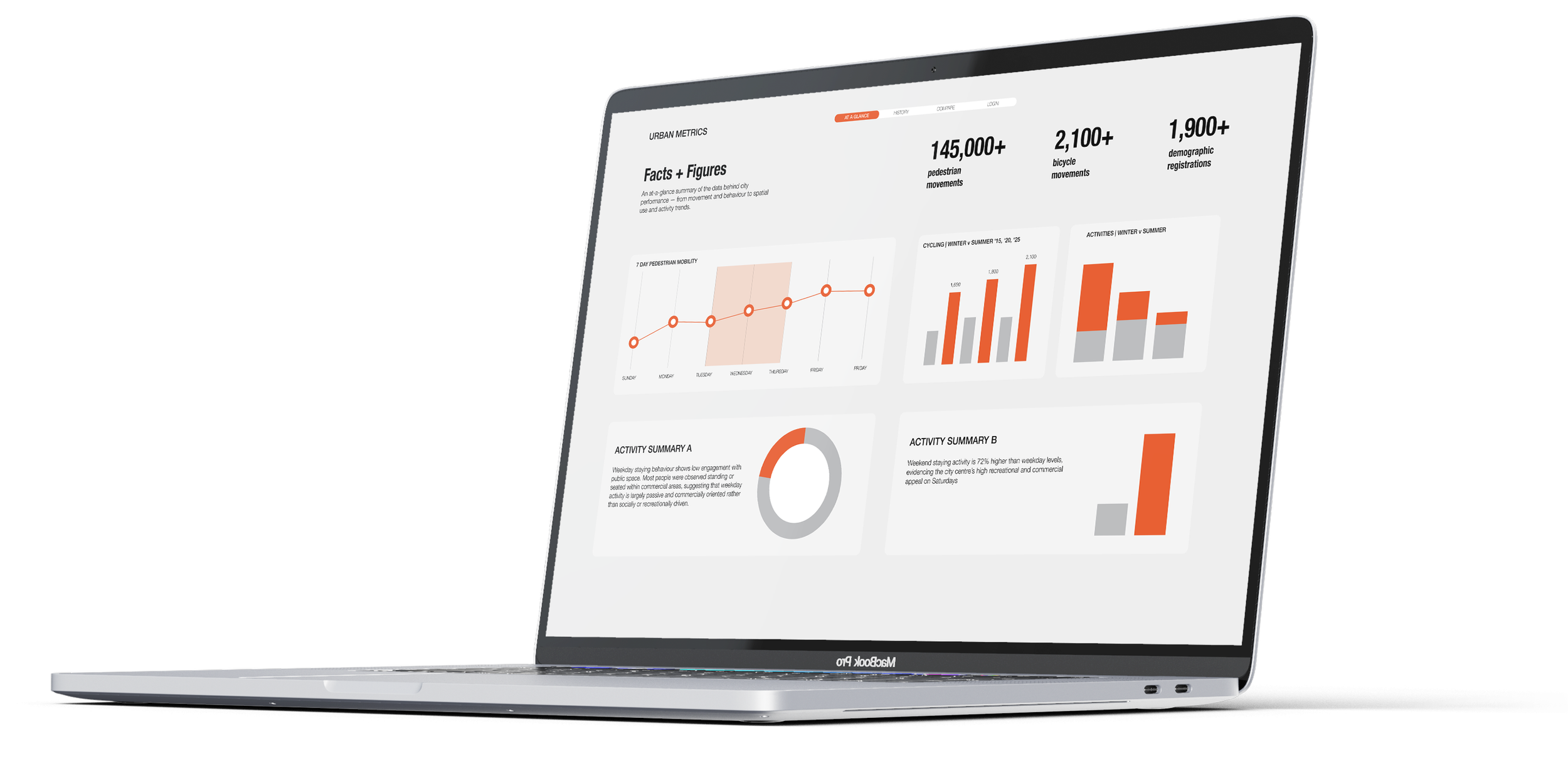
How people move, gather, and spend time in a place reveals how it truly performs. Understanding these patterns is essential to creating vibrant urban centres — without this knowledge, all we have is guesswork.
Using automated sensors and on-site observation, we measure where people move, stop, and stay, turning real-world activity into insights that inform better planning, design, and investment.
-
We capture reliable, long-term activity data to understand trends, change, and performance over time.
-
We study how people actually use the urban environment — who they are, how they interact, where they linger, and why — revealing opportunities to strengthen place experience and economic outcomes.
-
We quantify how land and public space are structured and used, linking movement and behaviour to spatial conditions to guide priorities, funding, and interventions.
Our value.
Replace guesswork with fact.

For over a decade, we’ve designed and deployed targeted, active transport and behavioural data solutions to capture, analyse and identify what’s working, what isn’t, and where investment will deliver the strongest social and economic performance.
Our difference.
Confident insights and better decisions — not just counts and sensors.
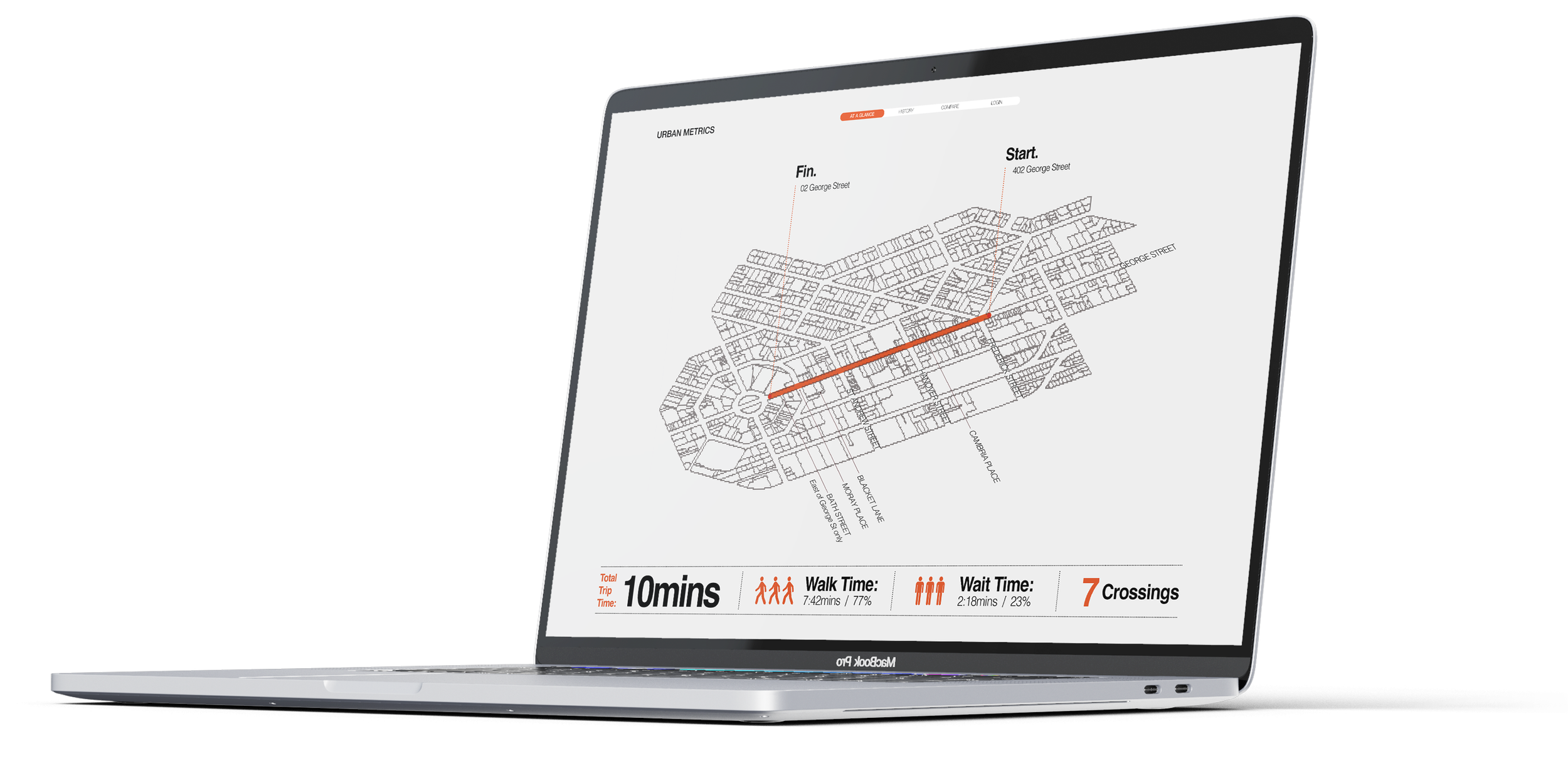
With backgrounds in urban planning, we combine place expertise with robust analytics to reveal patterns others overlook — turning raw data into practical, defensible insight that supports confident decisions.
The result is better targeted strategies, stronger returns, and more resilient, high-performing places.
-
Using data to improve commercial performance
Connect street footfall and dwell behaviour with known customer visitation to evaluate performance, identify opportunities and understand what’s driving results.
Support marketing and retail investment decisions with insight into pedestrian volumes, demographics and movement patterns.
Inform location and expansion decisions by understanding how people move through, use and engage with different streets and places.
-
Using data to optimise public spending
Link human movement, activity and inclusivity with planning priorities to direct investment where it will have the greatest impact.
Measure social and economic return by understanding how public space changes influence behaviour and use over time.
Provide clear, defensible evidence to support business case justifications, budget decisions, reporting and funding bids.
-
Using data to build confidence
Show where investment is delivering results by clearly evidencing changes in activity, use and performance.
Provide a transparent, defensible evidence base that supports accountability for public spending.
Equip staff and elected officials with clear insights to explain decisions, build support and strengthen the case for future investment.
-
Using data to communicate performance
Quantify the return on investment across social, economic and public-life outcomes.
Support clear, credible reporting that builds trust with stakeholders, ratepayers and funders.
Establish consistent benchmarks to monitor progress and guide smarter funding decisions.