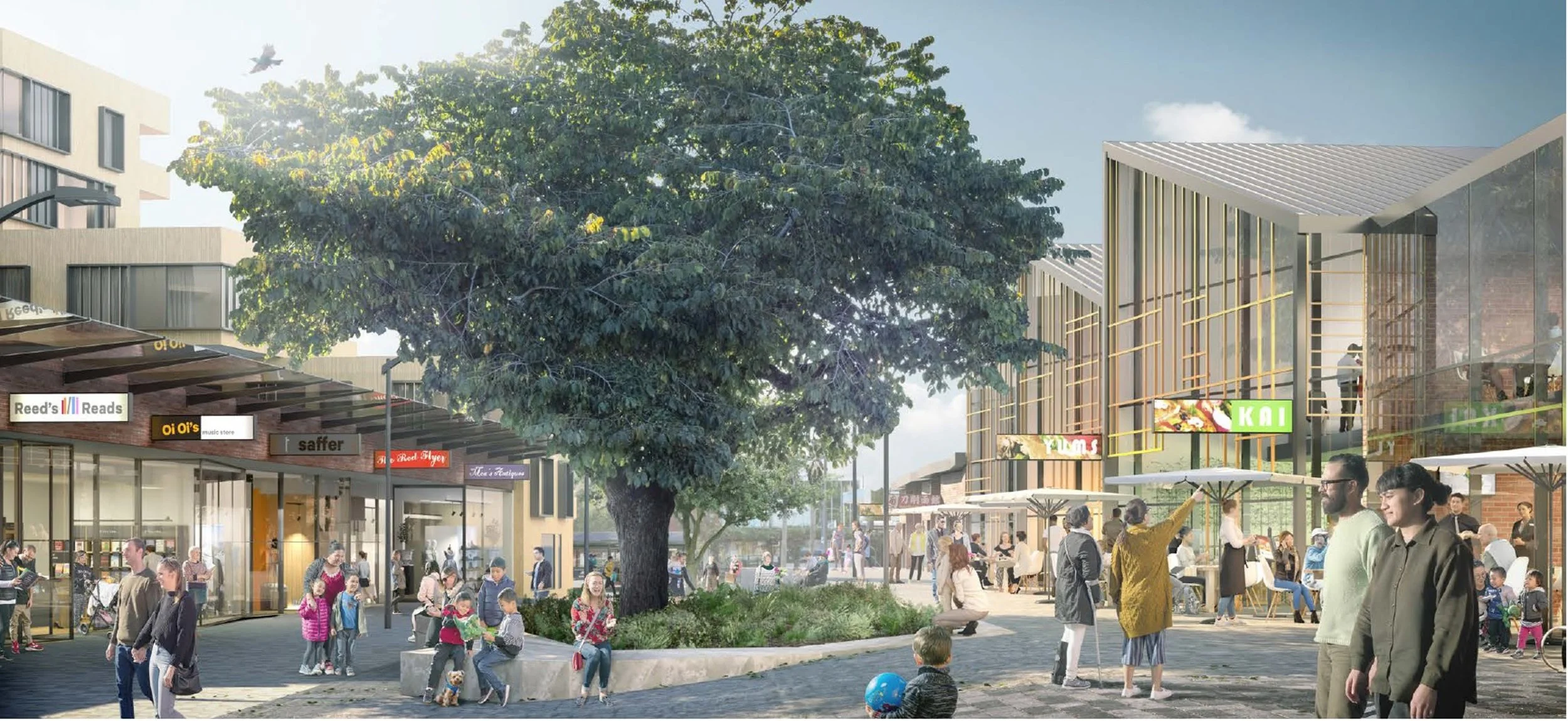
Urban Regeneration in Te Onewa Northcote
Measure activity. Understand patterns. Unlock potential.
A Public Life Public Space Study was commissioned to understand how people move, stay and experience Northcote Town Centre, providing a robust, transferable evidence base to support regeneration planning and investment.
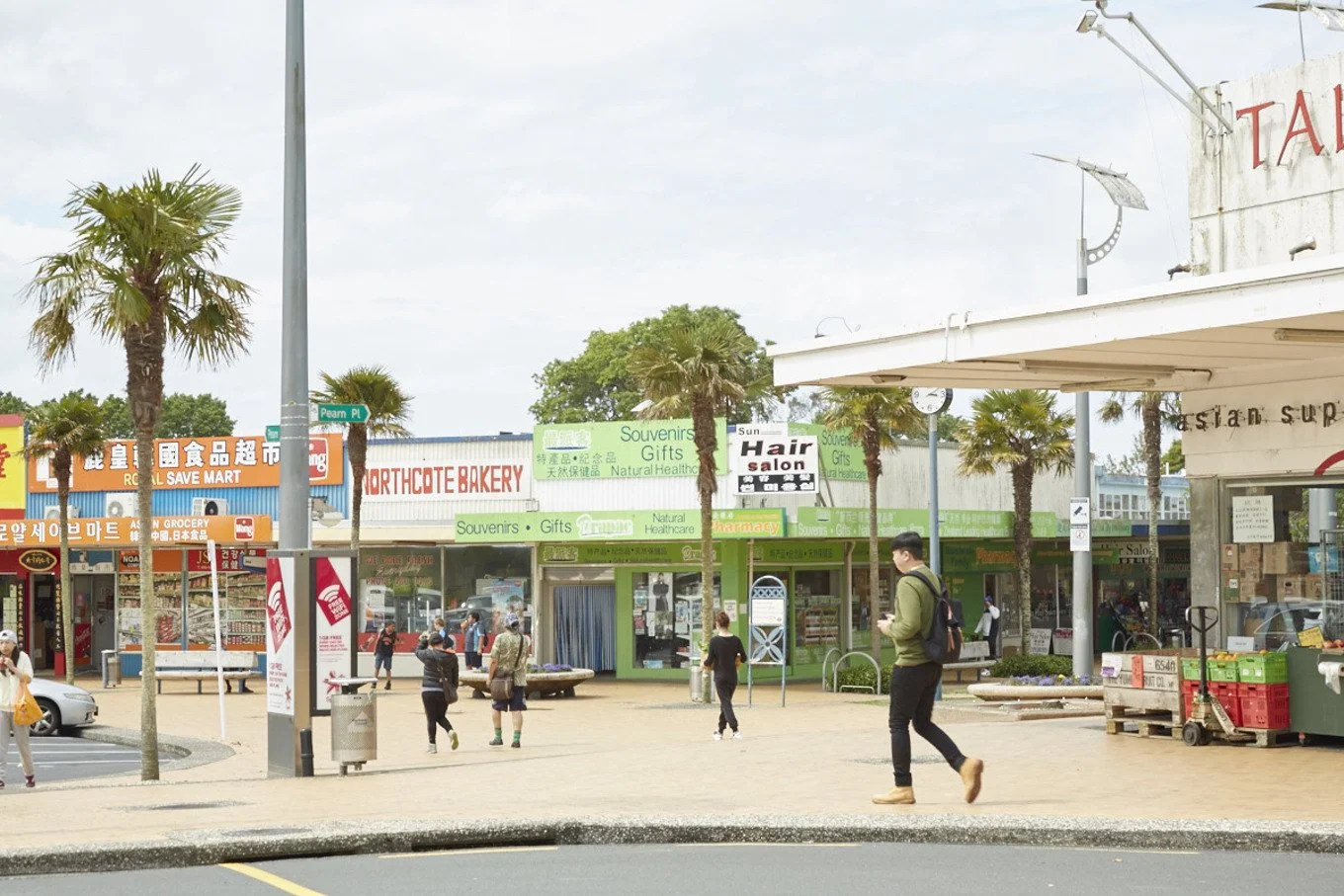
What we measured.
A structured street-level data programme combining observation with qualitative place assessment.
Captured:
Pedestrian and cycling volumes · Staying activity · Visitor demographics ·Time-of-day and day-of-week patterns · Public space comfort and amenity · Levels of service
This established a consistent baseline for immediate interventions and long-term monitoring, moving decision-making beyond perception to measurable evidence.
What the data revealed.
Pedestrian activity concentrated along primary routes
Secondary streets and spaces remain underused.
A 9–5 centre in a 24/7 community
Use patterns reflect a service-led centre with limited evening and weekend activity.
Cycling passes through, but rarely stops
Cyclist volumes are commuter-focused, with little evidence of local trips.
People pass through more than they stay
Lingering occurs mainly in a few comfortable or sheltered locations.
Some user groups are missing
Children, young people, and evening users are underrepresented.
Potential not fully realised
Well-designed spaces underperform where surrounding edges and land uses do not generate consistent activity.
Why it mattered.
Street-level evidence identified opportunities to:
• Strengthen pedestrian desire lines and introduce inviting places to pause
• Support diverse retail, hospitality and housing to broaden activity beyond business hours
• Improve low-stress cycling connections and visible bike parking
• Increase comfort and amenity in public spaces to encourage longer stays
• Introduce inclusive, family-friendly elements and improve lighting and surveillance
• Pair public space improvements with stronger edge activation and nearby destinations
The study provides a transferable, evidence-led foundation for regeneration and investment, showing exactly where interventions will have the greatest impact.